Research Work

The Human Capital Legacy of State-Led Industrialization: Long-Term Impacts of China's 156 Projects

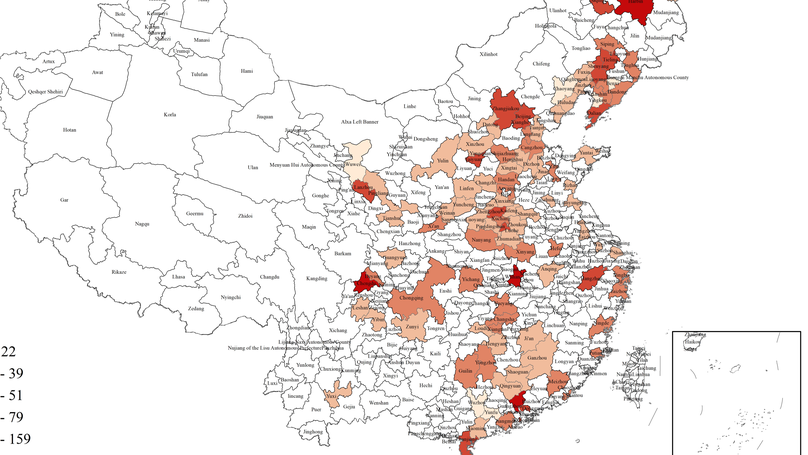
This paper examines the long-term effects of early-life exposure to large-scale industrialization on adult health, economic outcomes, and well-being. Leveraging the spatial and temporal variation in China’s Soviet-aided 156 Projects, a cornerstone of the First Five-Year Plan from 1953 to 1957, we link city-level industrial investment during 1950 to 1961 to individual outcomes in the China Health and Retirement Longitudinal Study. Focusing on exposure during ages 6 to 12, a critical window for human capital formation, we find that individuals in project cities enjoy significantly better later-life outcomes. They exhibit fewer limitations in activities of daily living, higher cognitive performance, 5 to 7 percent higher total income, and substantially greater private pension income, consistent with improved access to formal-sector employment. City-level analyses confirm that project cities experienced earlier expansion of education infrastructure, though effects on health facilities and aggregate GDP were modest. Our results reveal a positive net legacy of state-led industrialization, operating through enhanced childhood living standards and labor market opportunities. By studying a beneficial economic shock during childhood, this paper complements the literature on early-life adversity and provides new evidence on the human capital returns to historical industrial policy in a major developing economy.
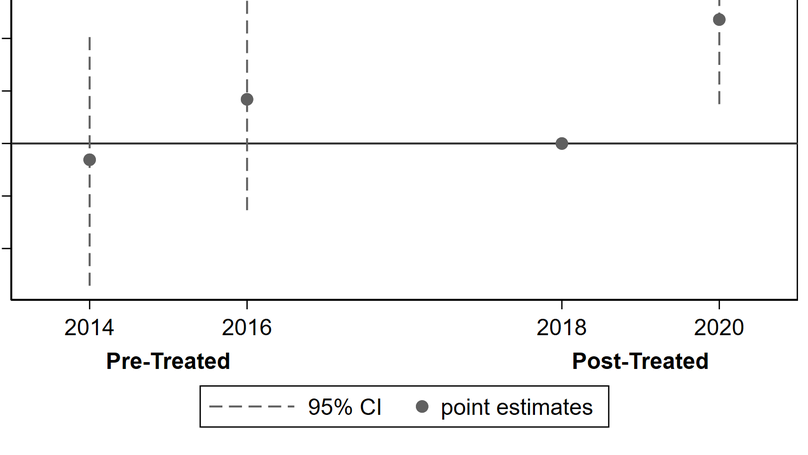
Cost of Zero-Covid: Effects of Anti-contagious Policy on Labor Market Outcomes in China

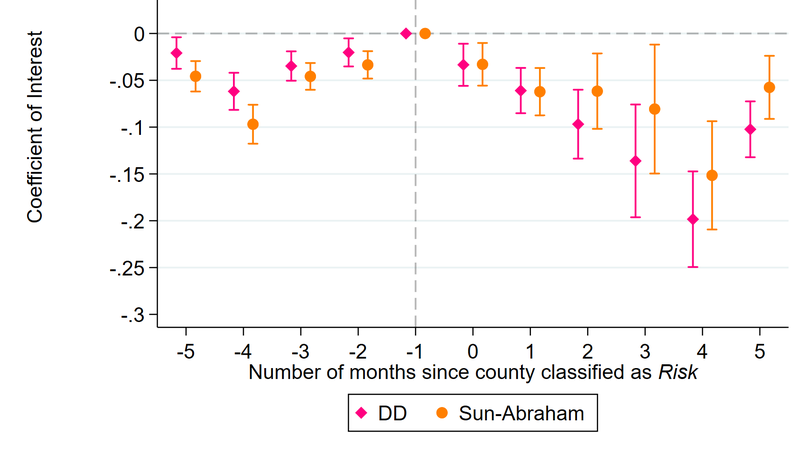
We study the effect of China’s anti-contagious policy on labor market outcomes in 2020. By exploiting variation in the duration of the zero-Covid policy in China, which is triggered by the outbreak of new cases of COVID-19 in a 14-day observation window, we find that a 10% increase (3.7 days in average) in the duration of the zero-Covid policy caused the probability of unemployment to increase by around 0.1. Unlike most large economies that suffered a serious health shock from the COVID-19 pandemic, China effectively contained the scale and the spread of the initial outbreak in 2020. This provides a special empirical setting to examine the policy effect of anti-contagious policies, and we show that the disruption on the labor market majorly comes from the zero-Covid containment measures, while health shocks are trivial on the labor market outcomes. Moreover, the zero-Covid policy decreases the labor income and hours worked for employed individuals, and the policy effect is heterogeneous across demographic groups. We also examined the policy effect during different phases of the pandemic, and the results imply that the stringent clearance during the first stage of the pandemic (ended by Feb 17, 2020) caused the negative impacts on the labor outcomes, while the subsequent dynamic clearance strategy did not generate significant disruption on the labor market outcomes in 2020.